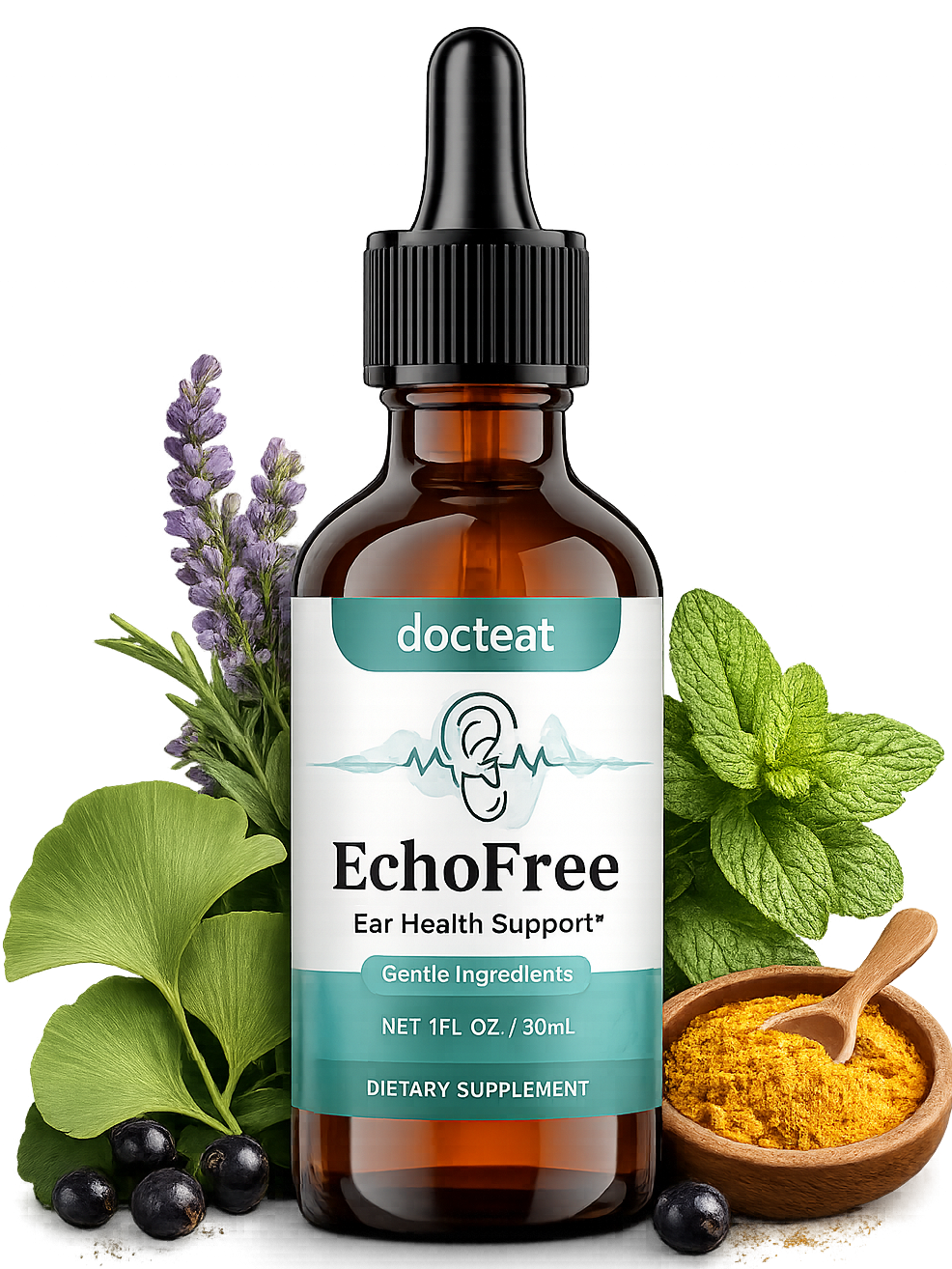
Echo Free
Natural Support for Ear Health & Mental Clarity
Reclaim Your Peace, Restore Your Focus
A research-backed natural formula designed to support ear health, reduce discomfort, and promote mental clarity
✓ 60-Day Money-Back Guarantee ✓ Made in USA ✓ FDA Registered Facility
Understanding Persistent Ear Ringing
Millions of Americans experience persistent ear ringing, buzzing, or humming sounds that can affect daily life, sleep quality, and overall well-being. This condition, commonly known as tinnitus, is often dismissed as something you have to "learn to live with."
But recent research suggests there may be more to the story. Studies have shown that persistent ear ringing is often linked to underlying factors that, when properly addressed, may support improved ear health and comfort.
The Impact on Daily Life
Persistent ear sounds can affect more than just your hearing. Many people report:
• Difficulty concentrating on tasks
• Challenges with sleep and rest
• Reduced enjoyment of conversations and social activities
• Increased stress and feelings of frustration
• Concerns about long-term ear and brain health
The good news? Emerging research in the field of ear health and neurological wellness suggests that supporting your body's natural processes may help promote comfort and clarity.
Understanding the Root Factors
Recent scientific research has identified that persistent ear ringing may be linked to inflammatory responses in the nervous system, particularly involving the nerves near the inner ear.
When the body experiences ongoing inflammation, certain inflammatory compounds called cytokines can affect nerve sensitivity. This may lead to what researchers call "sensory hypersensitivity" – where the nervous system amplifies normal background signals into noticeable sounds.
The Cytokine Connection
Cytokines are small proteins that play a role in your body's inflammatory response. While inflammation is a natural and necessary process for healing, chronic or excessive inflammation can sometimes cause discomfort.
Research published in peer-reviewed journals has shown that reducing inflammatory cytokines may support:
• Improved nerve function and sensitivity
• Better nervous system balance
• Enhanced comfort in the ear and surrounding areas
• Support for overall cognitive function and mental clarity
A Natural Approach to Balance
Rather than simply masking symptoms, Echo Free was formulated to work with your body's natural processes, targeting the underlying factors that may contribute to ear discomfort and supporting your journey toward improved well-being.
How Echo Free Supports Your Ear Health
Echo Free was developed based on extensive research into natural compounds that may help support healthy inflammatory responses and nerve function. Our formula combines carefully selected ingredients that work synergistically to promote ear health and mental clarity.
The Natural Formula Approach
Natural Anti-Inflammatory Compounds
Selected botanical extracts and natural compounds researched for their potential to support healthy inflammatory responses in the nervous system.
Nerve Health Support
Ingredients that may help promote optimal nerve function and sensitivity, supporting the body's natural balance.
Cognitive Function Enhancers
Natural compounds studied for their potential to support mental clarity, focus, and overall brain health.
Circulatory Support
Ingredients that may help promote healthy blood flow to the inner ear and surrounding areas, supporting optimal ear function.
The Echo Free Difference: Our formula is based on published research into natural compounds that support the body's cytokine balance. By addressing inflammatory factors at their source, Echo Free may help your body restore its natural equilibrium and comfort.
Expected Benefits & Support
Ear Comfort Support
May help promote comfort and reduced sensitivity in the ear, supporting a sense of calm and peace.
Mental Clarity
Supports cognitive function, focus, and mental sharpness for improved daily performance.
Stress Balance
Natural ingredients that may help support healthy stress responses and promote a sense of well-being.
Sleep Quality
May support better sleep quality by promoting relaxation and reducing nighttime discomfort.
Overall Wellness
Comprehensive support for nervous system health, circulation, and inflammatory balance.
Natural Energy
Support for sustained energy levels and vitality without jitters or crashes.
Real People, Real Results
"I've tried many different approaches over the years, but nothing quite compares to what I've experienced with Echo Free. After just a few weeks, I noticed a significant improvement in my overall comfort and peace of mind. I'm sleeping better and feeling more like myself again."
"The change has been remarkable. From the very first week, I felt a difference. The constant discomfort that had been part of my daily life for years has diminished significantly. I can focus better at work and actually enjoy quiet moments again."
"I was skeptical at first, but Echo Free exceeded my expectations. Not only has it helped with my ear discomfort, but I've also noticed improvements in my mental clarity and overall well-being. It's been a game-changer for my quality of life."
Join thousands of satisfied customers who have experienced the Echo Free difference
Uncompromising Quality Standards
🇺🇸 Made in USA
Proudly manufactured in the United States
✓ FDA Registered
Produced in FDA registered facility
⚗️ GMP Certified
Good Manufacturing Practices
🔬 Third-Party Tested
Independent laboratory verification
Every batch of Echo Free undergoes rigorous quality control testing to ensure purity, potency, and safety. We reject the use of fillers, artificial additives, or unnecessary preservatives. What you see on the label is exactly what you get in every bottle.
Our Promise to You
60-Day Money-Back Guarantee
We're confident in the quality and effectiveness of Echo Free. That's why every order is protected by our 60-day, 100% money-back guarantee.
If you're not completely satisfied with your results for any reason, simply contact our friendly customer support team within 60 days for a full refund. No questions asked.
You have nothing to lose and everything to gain.
Frequently Asked Questions
How does Echo Free work?
Echo Free works by supporting your body's natural inflammatory response, particularly targeting cytokines that may affect nerve sensitivity. Our carefully selected natural ingredients work synergistically to promote healthy nerve function, support circulation, and encourage overall ear and brain health.
How long does it take to see results?
While individual results may vary, many customers report noticing positive changes within the first few weeks of consistent use. For optimal results, we recommend taking Echo Free daily for at least 30-60 days, as natural supplements work best when given time to support your body's natural processes.
Is Echo Free safe?
Yes. Echo Free is made from natural ingredients and is manufactured in an FDA-registered facility following strict Good Manufacturing Practice (GMP) guidelines. Every batch is third-party tested for purity and potency. However, as with any supplement, we recommend consulting with your healthcare provider before use, especially if you have any pre-existing medical conditions or are taking other medications.
How should I take Echo Free?
The recommended dosage and usage instructions are provided on each bottle. For best results, take Echo Free consistently as directed with water, preferably with a meal.
What if Echo Free doesn't work for me?
Every order is protected by our 60-day money-back guarantee. If you're not satisfied with your results for any reason, simply contact our customer support team for a full refund. We want you to feel confident in trying Echo Free completely risk-free.
How many bottles should I order?
For best results, we recommend ordering at least a 3-6 month supply. Natural supplements work best when taken consistently over time, allowing your body to fully benefit from the ingredients. Many customers choose our multi-bottle packages for better value and uninterrupted use.
Take the First Step Toward Peace & Clarity
Join thousands of satisfied customers who have chosen Echo Free to support their ear health and overall well-being. With our 60-day money-back guarantee, you have nothing to lose.
Your journey to better ear health starts today.
Get Echo Free Now✓ Secure checkout ✓ Fast shipping ✓ 24/7 customer support
Ready to experience the Echo Free difference?
Get Started Today